

Expanding community eye and hearing care would improve access to care - AND save the UK £2.91bn a year by 2040
Greater use of community eye and hearing care services could save the UK £2.91 billion annually by 2040, a sum equivalent to the cost of 70 million GP appointments, according to a new report.
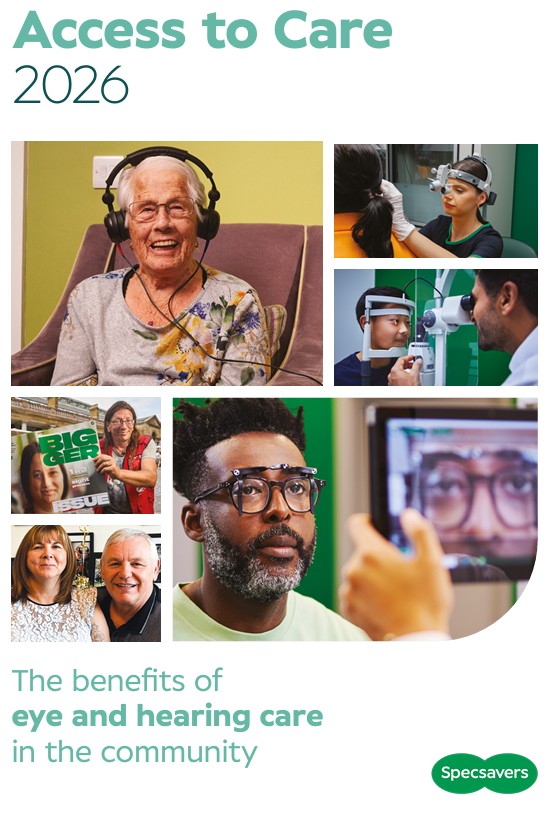
Specsavers 2026 access to care report says cumulative savings of approximately £16bn between 2027 and 2040 could be generated by fully using the expertise, capacity and accessibility of community optometry and audiology.
‘Nationwide community eye and hearing services would deliver faster access for patients, a more sustainable NHS and, as our new research shows, billions in economic savings. Patients cannot afford further delay,’ says Giles Edmonds, clinical services director at Specsavers.
‘Our sector stands ready to work with national governments, health boards and integrated care boards to deliver the community-based reforms needed to transform access to care for all.’
The report notes how sight loss currently costs the economy £56.7bn while the figure is £49.7bn for hearing loss. These costs are predicted to rise to £70.3bn and £56.6bn by 2040.
Mr Edmonds adds: 'These are huge figures, but also very human impacts. Your friends and family may be affected. Who wouldn’t want to improve access to care to address this need, while also saving the nation money in an age when public spending is under huge pressure?’
Supporting older people
Sight and hearing loss can have a significant impact on older people, notes the report, particularly those in care homes. Up to 50% of care home residents have sight loss, while 80% live with hearing loss.
‘Poor vision and hearing are major contributors to avoidable falls. Sight-related falls lead to hospital admissions that cost the NHS £28m annually,’ says Mr Edmonds.
‘Better access to eye and hearing care is not just a clinical issue. It is about helping people maintain their independence, reducing avoidable falls and ensuring people receive diagnosis, treatment and support earlier.’
What is the Specsavers' access to care model
The report also sets out the ‘access to care’ model, which is Specsavers’ blueprint for delivering more sight and hearing care in community settings, making greater use of primary care services to improve access, reduce waiting times and relieve pressure on hospitals and GPs.
The model includes universal access to community urgent eye care, community glaucoma services, nationally commissioned primary care audiology services, and removal of prior visit notifications to improve access to care for people living in communal settings such as care homes.
Building on existing services
‘The report is calling on policy makers to build on positive developments in Scotland, Wales and Northern Ireland and parts of England where the expertise, capacity and accessibility of community eye and hearing health services are being put to good use,’ continues Mr Edmonds.
In England for example, universal access to community urgent eye care alone could prevent 425,000 GP appointments, 200,000 hospital eye service appointments and 240,000 A&E attendances every year. It would generate a net NHS benefit of £30.7m annually.
Healthy nation, healthy high streets
‘By extending access to care in communities across the UK through a wider range of NHS and private eye and hearing health services, we are helping to improve the health of local people and playing a central role in improving the health of our high streets,’ adds Mr Edmonds.
‘By creating jobs, investing in training, and supporting local economies, health providers like Specsavers practices are the anchors of the modern high street. At Specsavers, we’ve also seen firsthand how retail and healthcare businesses like ours can be a genuine launchpad for young people for a genuine career.’
Specsavers overall annual Gross Value Added (GVA) contribution to the UK economy in 2026 was £1.767bn.
‘Shifting care from hospitals into the community delivers better outcomes for patients, better value for taxpayers and supports the revitalisation of high streets throughout the UK,’ concludes Mr Edmonds.
The report can be read at: https://www.specsavers.co.uk/reports/access-to-care-2026