

Specsavers champions expansion of community eye and hearing services at UK party conferences
Community optometrists, dispensing opticians and audiologists already bring clinical expertise into high streets across the UK. At this autumn’s political party conferences, Specsavers made the case to policymakers that greater use of this community healthcare capacity could improve access to care, support high streets and bring wider benefits for the health service and economy.
Why community eye and hearing care matters to policymakers
Access to eye and hearing care is not only a clinical issue. It is also a question of how the UK makes effective use of healthcare expertise and capacity that already exists within local communities.
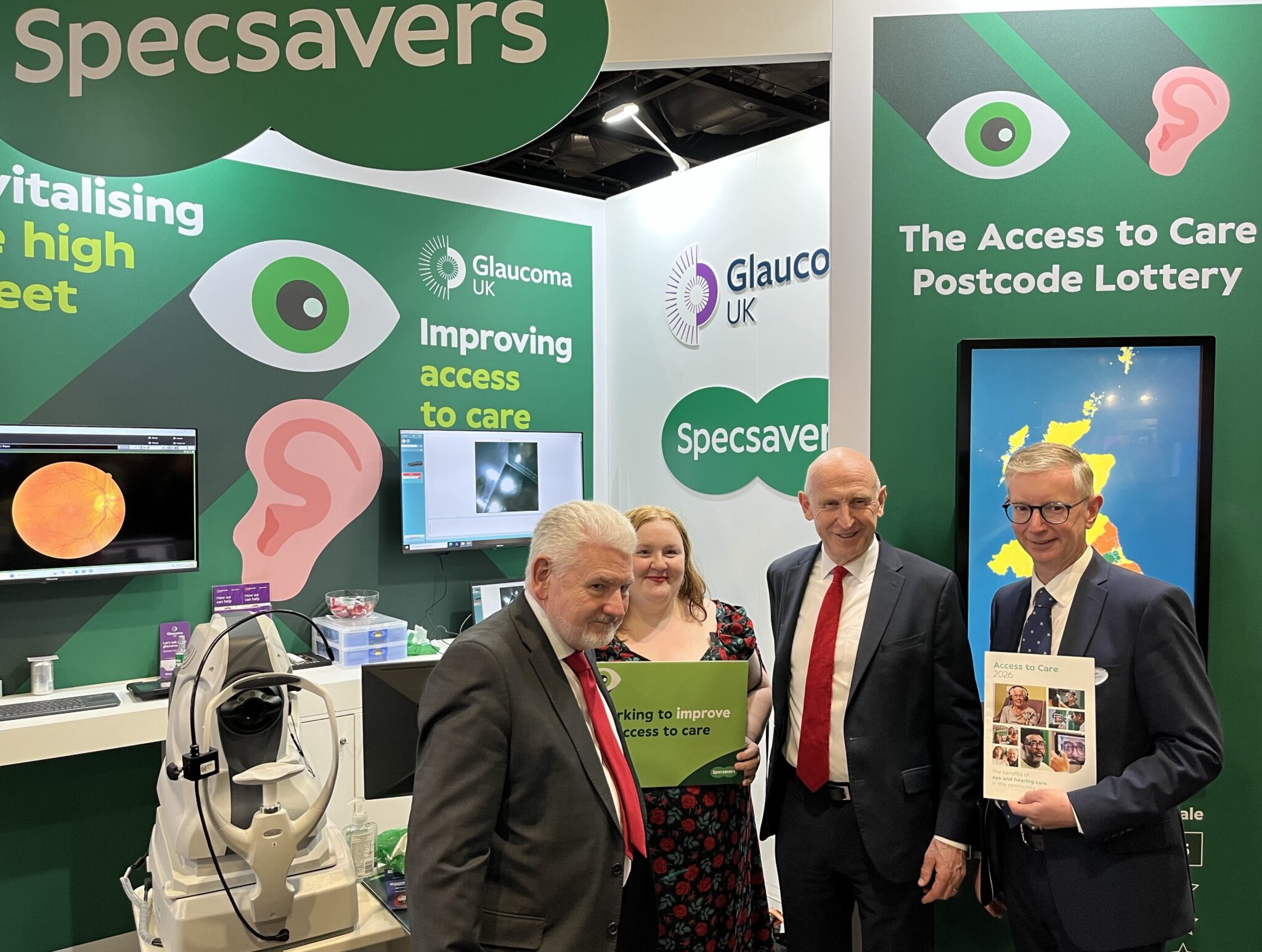
That was the message Specsavers took to the Labour and Conservative party conferences. Ministers, shadow ministers, MPs, councillors and delegates engaged with Specsavers clinicians and policy experts on the potential to provide more eye and hearing care closer to home. Chancellor John Healey was among those to visit the Specsavers stand.
Giles Edmonds, clinical services director at Specsavers, says:
‘Party conferences are a valuable opportunity to show policymakers what community eye and hearing professionals already deliver, and how we are ready and able to do more.’
He adds:
‘We made the positive case for making greater use of primary care eye and hearing expertise to improve access to care, support high streets and the economy.’
More than 1,500 eye and hearing checks demonstrated community capacity
The conferences also offered an opportunity to demonstrate, rather than simply describe, the expertise available in community settings.
At exhibition stands at the Labour and Conservative conferences, Specsavers optometrists and audiologists delivered more than 1,500 eye and hearing checks. Equipment used included an optical coherence tomography (OCT) machine and digital otoscope. Several people were referred for further investigation after potential issues were identified.
OCT is an imaging technique used in optometric practice to provide detailed images of structures within the eye. A digital otoscope enables examination and imaging of the ear.
For Giles Edmonds, the activity put the case for community care into practical terms:
‘Delivering more than 1,500 checks provided a practical demonstration of what community eye and hearing professionals do every day. Our interactive map was another powerful talking point with MPs, highlighting the postcode lottery in access to community services, even between neighbouring constituencies.’
Tackling variation in access to community services
The ‘postcode lottery’ identified by Giles matters because access to community services can vary even between neighbouring constituencies.
That makes the development of community healthcare relevant not just to optometrists, dispensing opticians and audiologists, but to MPs and government. The question is how the healthcare system can make better use of existing primary and community care expertise so that more patients can benefit from services closer to home.
Alongside its exhibition stands, Specsavers representatives met parliamentarians, think tanks and other organisations and participated in fringe events examining how community eye and hearing services could improve access to care.
Eye and hearing care formed part of the wider healthcare debate
At the Labour Party conference, Specsavers sponsored a discussion bringing together health leaders and parliamentarians. Participants included Lord Victor Adebowale, chair of the NHS Alliance; Baroness Clare Gerada, GP and former president of the Royal College of General Practitioners; Scottish Labour deputy leader and Shadow Health and Care Secretary Jackie Baillie MSP; and Giles Edmonds.
Giles also took part in an NHS Alliance-organised fringe event at the Conservative Party conference examining similar issues.
These conversations matter because eye and hearing care do not sit apart from the wider debate about healthcare delivery. Community optometrists, dispensing opticians, audiologists and other eye and hearing professionals are part of the existing healthcare workforce and infrastructure available within local communities.
What happens next for community eye and hearing care?
For Specsavers, the next step is to keep that conversation going with policymakers.
Giles says:
‘Politicians have an opportunity to improve access for patients, strengthen local high streets and deliver wider benefits for the health service and economy by backing the expansion of community eye and hearing services.
‘Specsavers experts are ready to help, and we look forward to continuing these conversations with policymakers in the months ahead.’
For community optometrists, dispensing opticians, audiologists and colleagues, that puts the expertise available on UK high streets firmly within a bigger policy question: how the country can make better use of community healthcare to improve access for patients.
Key points
- Specsavers used the UK political party conferences to make the case for greater use of community eye and hearing services.
- Specsavers optometrists and audiologists delivered more than 1,500 eye and hearing checks at Labour and Conservative conference exhibition stands.
- The activity demonstrated directly to policymakers the expertise and capacity already available in community settings.
- Discussions with politicians highlighted variation in access to community services and the potential benefits of providing more care closer to home.
- Community optometrists, dispensing opticians and audiologists all have a stake in the wider policy debate about making greater use of healthcare expertise on UK high streets.